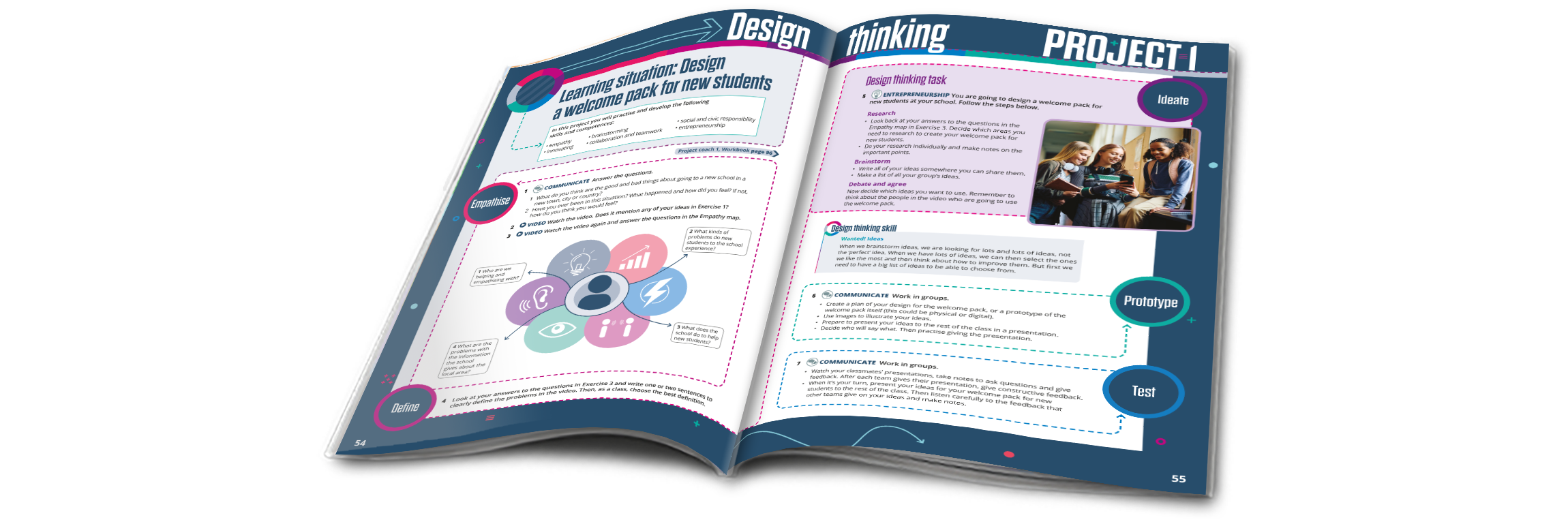
The Design Thinking is an approach to problem‑solving that puts people at the centre. It helps learners identify real needs, explore creative ideas and develop them into practical, meaningful solutions.
In the classroom, this method turns Learning Situations into motivating, real‑world projects that support the development of key competences.
Design Thinking in Learning Situations: The key steps
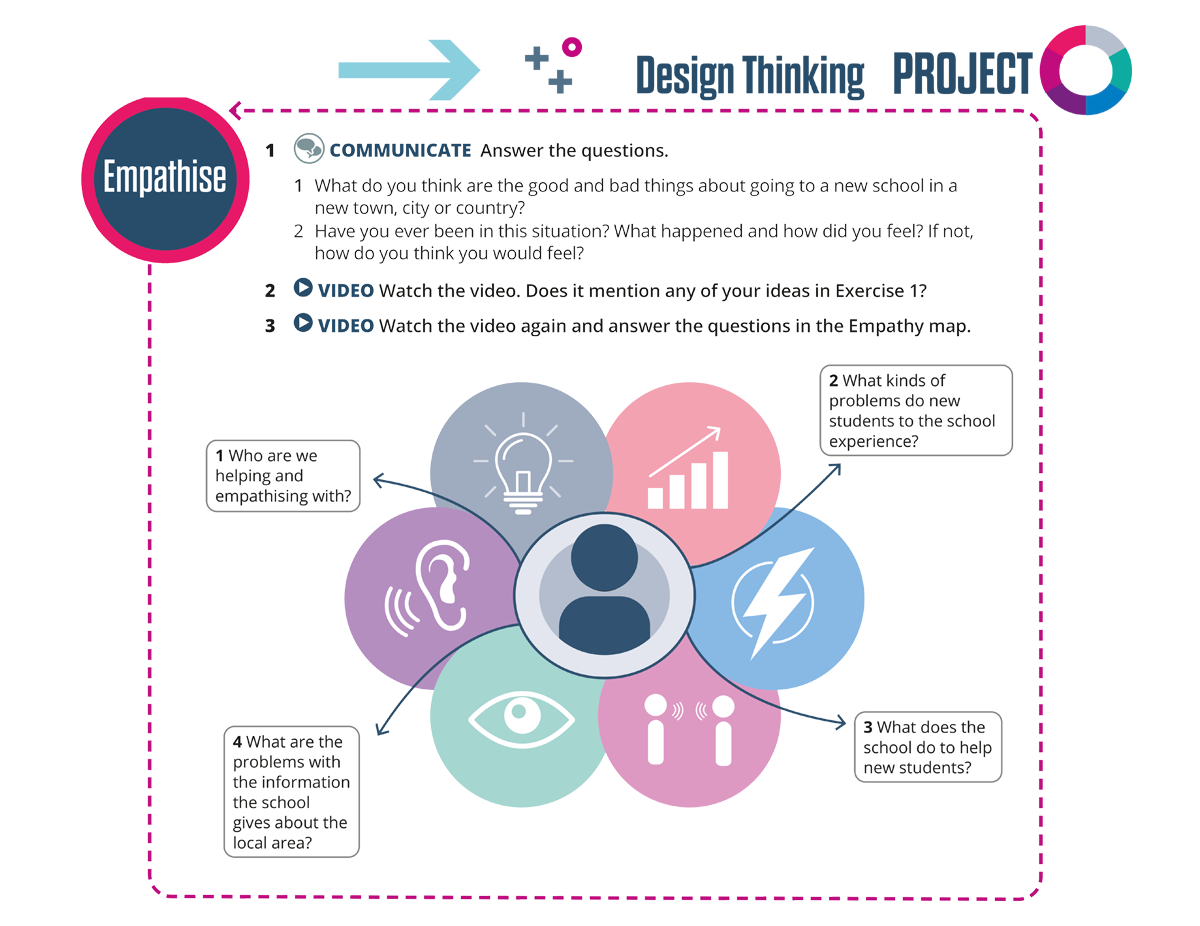
1. Empathise
The process begins by exploring the problem from the users’ point of view.
2. Define
Next comes organising the insights and identifying the key challenges and opportunities.
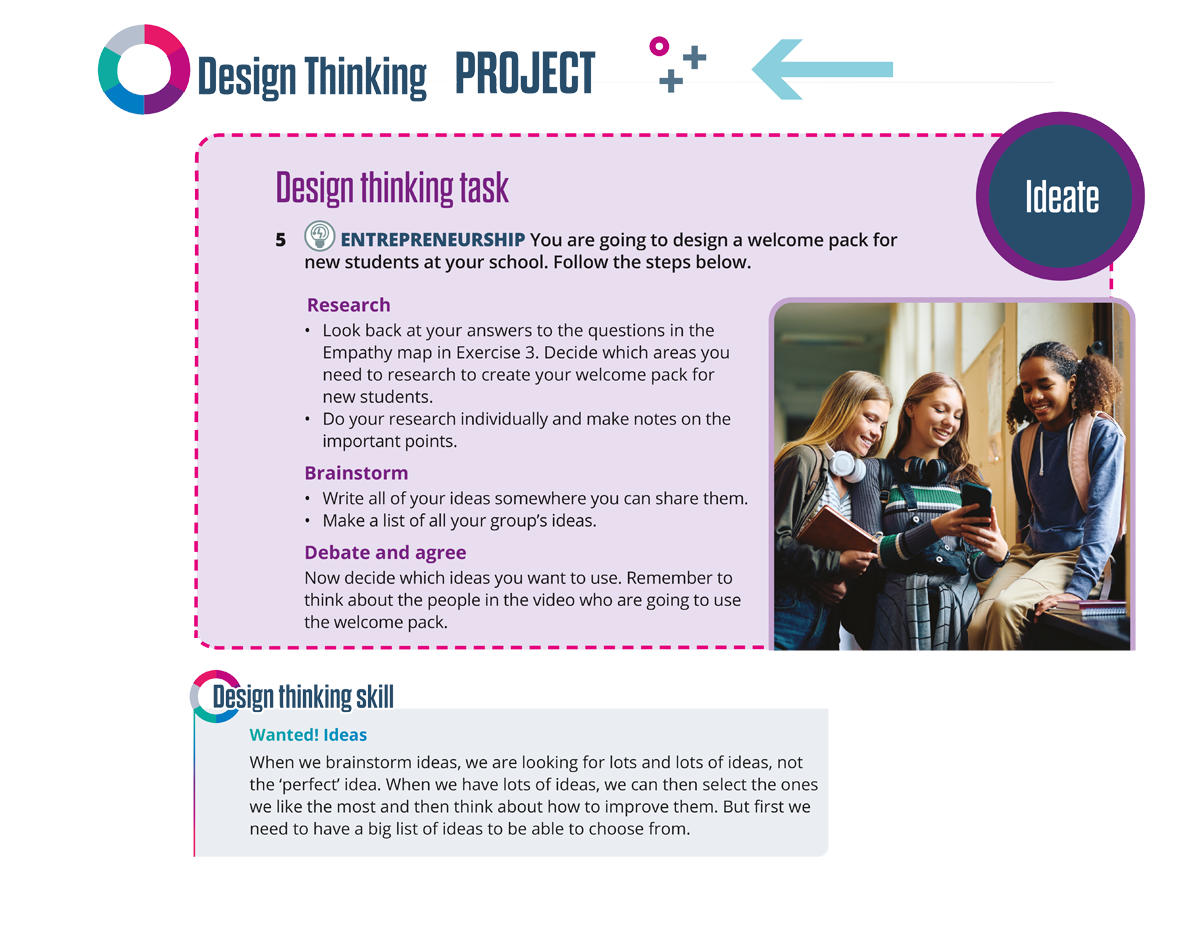
3. Ideate
Learners generate as many ideas as possible—every suggestion is welcome!
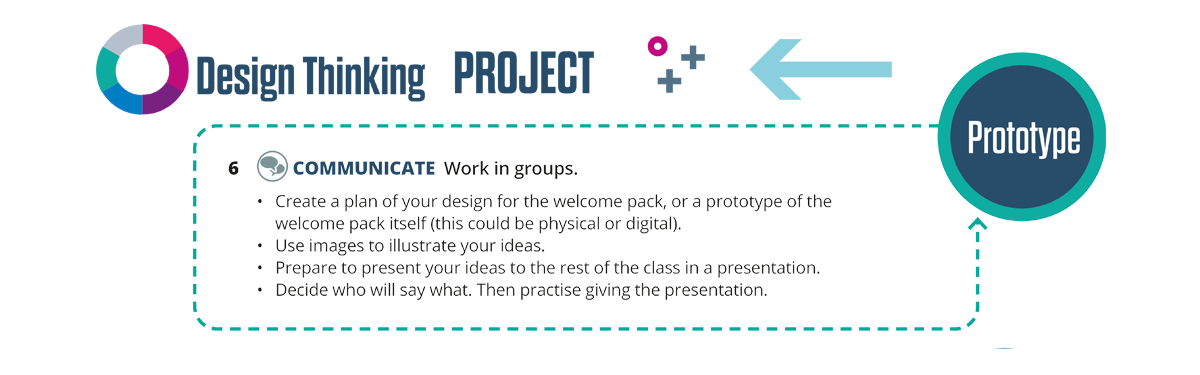
4. Prototype
Ideas take shape in a simple, tangible form that captures the essence of the proposed solution.
5. Test
Learners present their prototype, gather feedback to refine and strengthen their approach.
Subscribe and get early access to new teaching resources and updates.